Jan 3, 2026
Most growth metrics describe outcomes after they occur.
Velocity describes how a system behaves while it is operating.
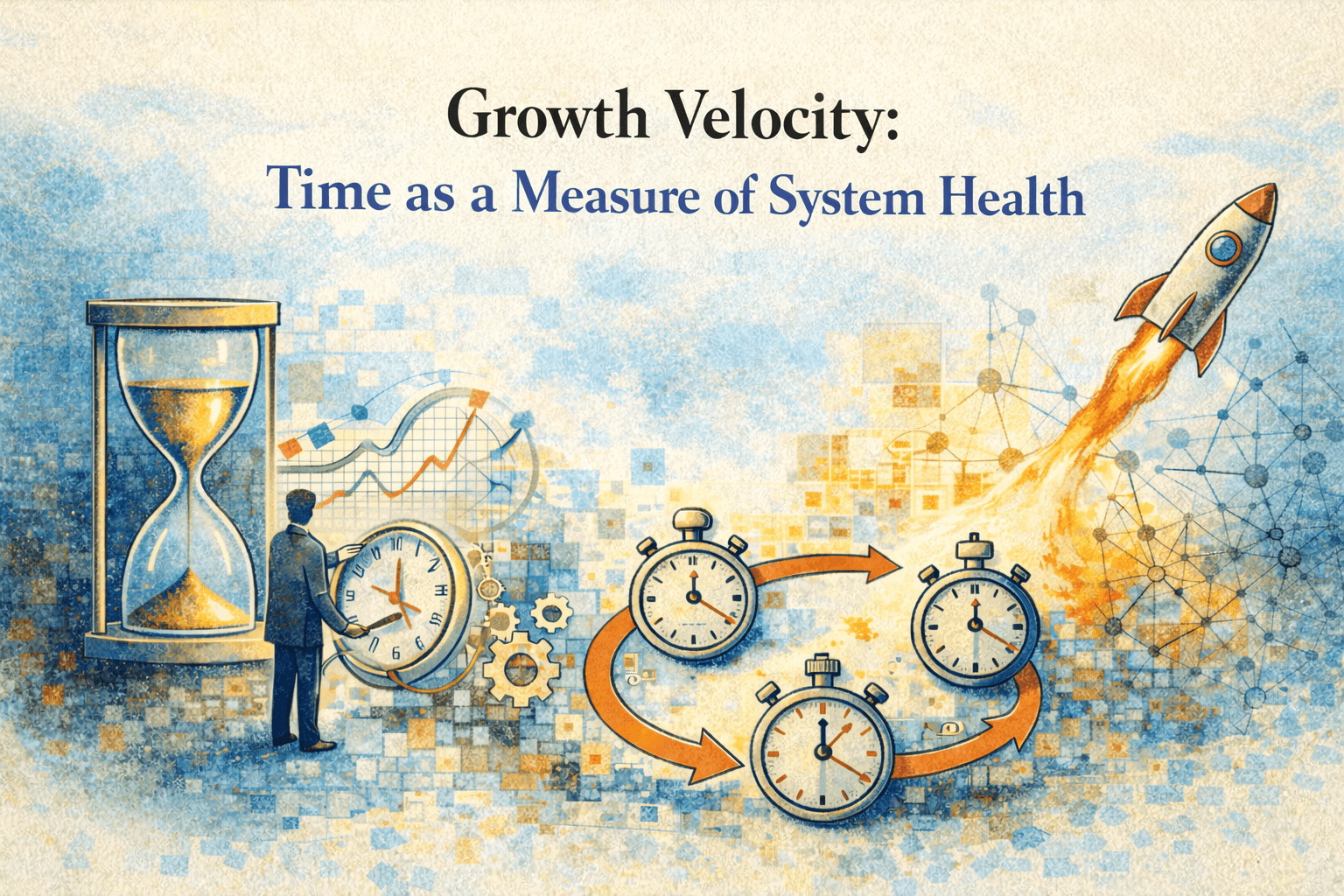
At Kruzeniski Digital, velocity is observed as time compression — the duration between input, feedback, and adjustment.
The specific unit of progress matters less than the interval between cycles.
Velocity as a Structural Signal
Shorter cycles indicate that the system is producing interpretable feedback quickly.
Longer cycles indicate that information is delayed, diluted, or difficult to act upon.
Velocity does not describe scale.
It describes learning.
A system can grow in volume without improving. It cannot increase velocity without becoming more intelligible.
Learning as a Function of Time
Every growth loop produces information.
When loops are short:
Insight arrives sooner
Corrections happen earlier
Improvements compound more consistently
This is why velocity often improves before scale becomes visible. The system stabilizes internally before results accelerate externally.
Speed is not the objective.
Time-to-understanding is.
Velocity Requires Causality
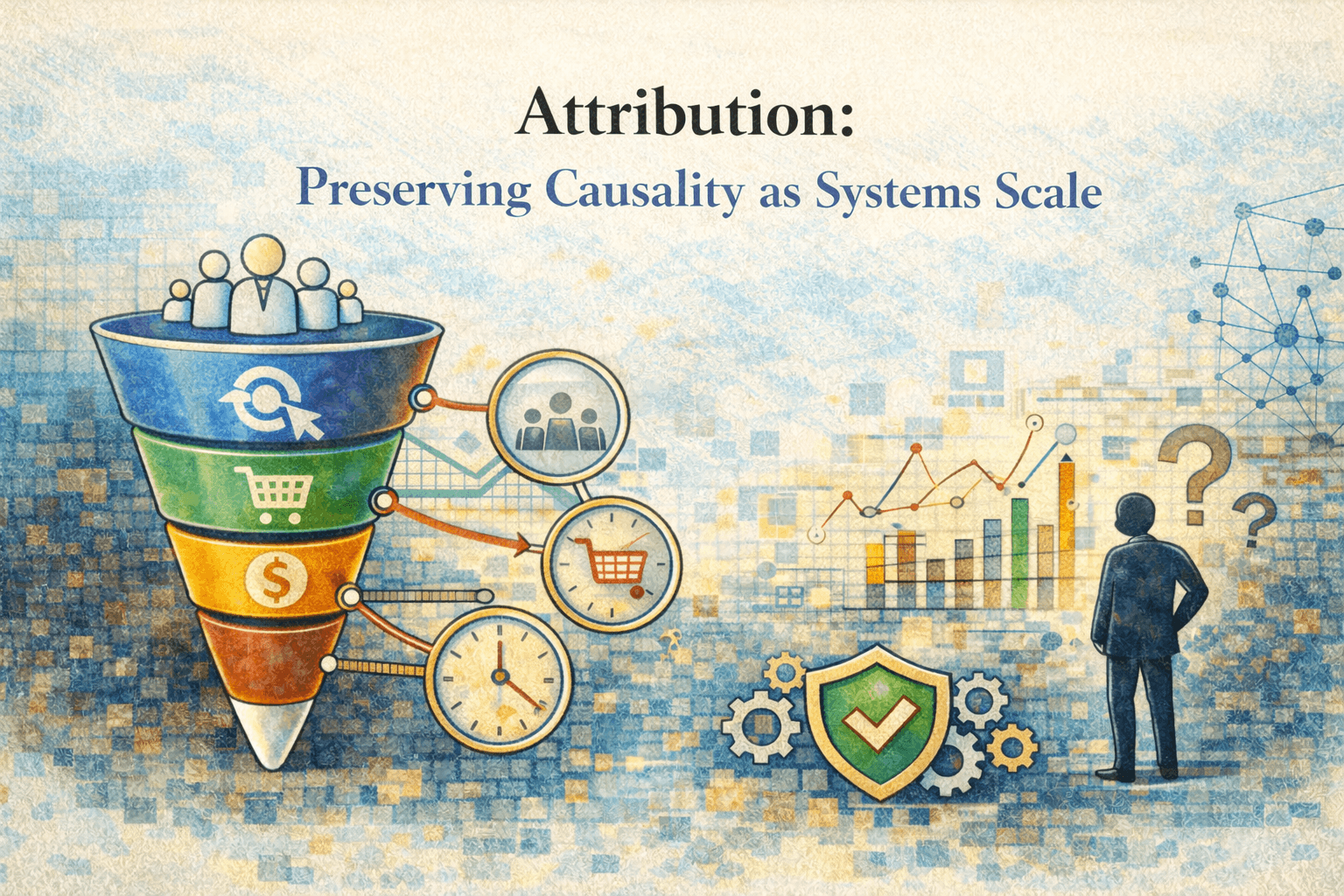
Velocity without attribution collapses into noise.
If cycles compress but outcomes cannot be traced to inputs, speed amplifies error rather than insight.
For this reason, velocity and attribution are interdependent. One governs how fast a system learns. The other governs whether that learning is reliable.
Growth systems become resilient when they learn quickly and understand what they are learning.