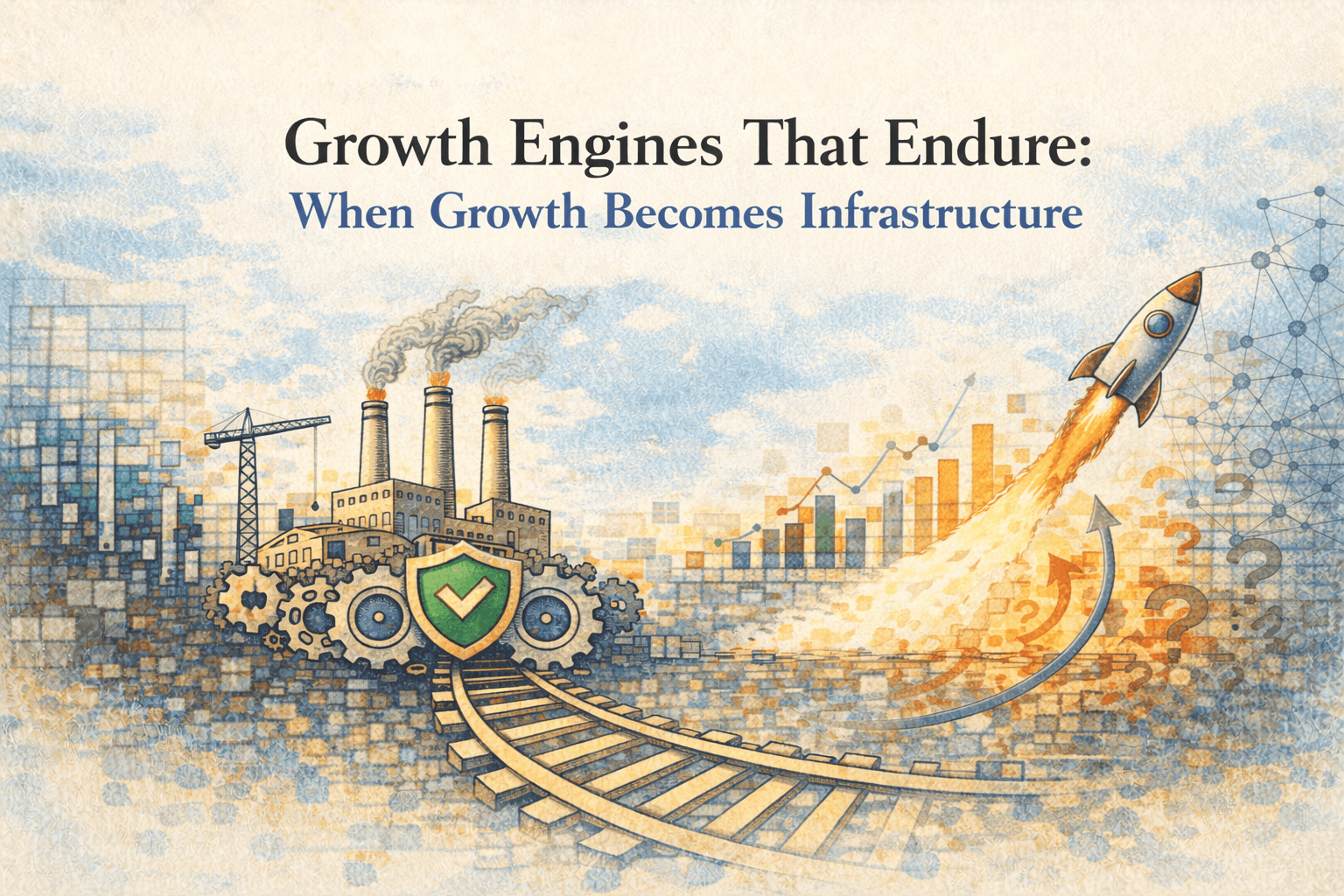
Growth Engines That Endure: When Growth Becomes Infrastructure

Growth Engines That Endure: When Growth Becomes Infrastructure

Growth Engines That Endure: When Growth Becomes Infrastructure

Jan 3, 2026

The endpoint of growth is not acceleration.
It is continuity.

Growth becomes infrastructure when it continues to function without constant intervention.

How Compounding Emerges Structurally

Compounding is not an event.
It is the result of alignment over time.

It emerges when:

  • Attribution preserves causality

  • Velocity compresses learning cycles

  • Margin of safety bounds downside

Each iteration improves the system itself, not just the outcome.

Over time, growth becomes more predictable, not because it is static, but because it explains itself.

Why Early Compounding Appears Subtle

In early stages, compounding is quiet.

Improvements are incremental. Gains are uneven. Progress appears modest.

Then acceleration occurs — not because something new was introduced, but because existing elements reinforced one another long enough to matter.

Scale follows coherence.

Growth as a Durable Property

When growth becomes infrastructure:

  • It persists through organizational change

  • It adapts to shifting conditions

  • It remains interpretable under pressure

At Kruzeniski Digital, growth is treated as a system designed to endure.

Not by avoiding uncertainty —
but by remaining legible as uncertainty increases.
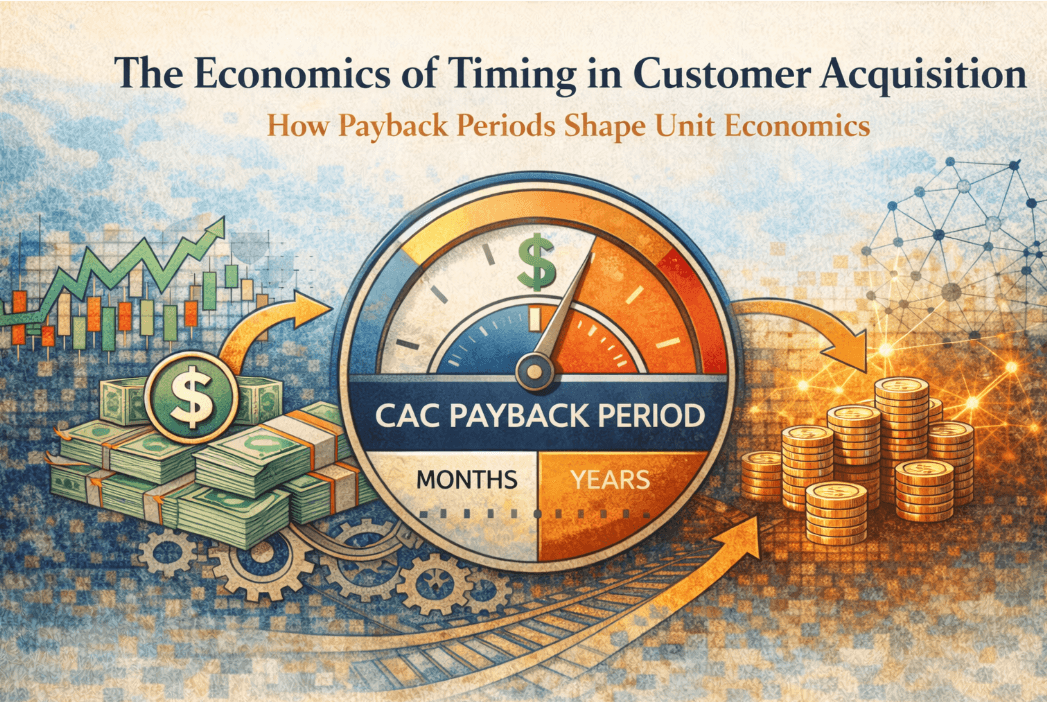
The Economics of Timing in Customer Acquisition

Feb 3, 2026

How Payback Periods Shape Unit Economics

Growth Engines That Endure: When Growth Becomes Infrastructure

Jan 3, 2026

The endpoint of growth is not acceleration. It is continuity. Growth becomes infrastructure when it continues to function without constant intervention.

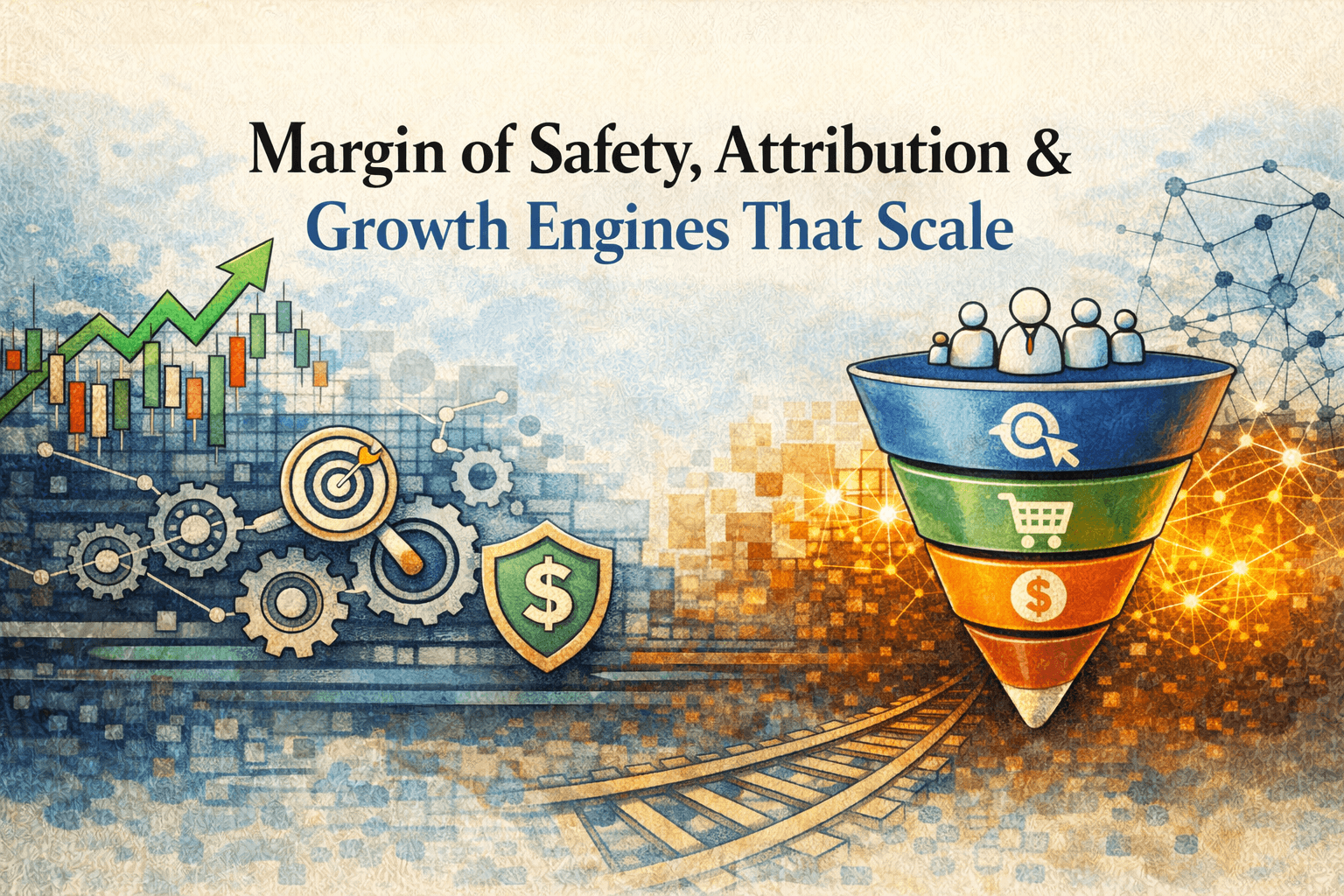
Margin of Safety, Attribution & Growth Engines That Scale

Jan 2, 2026

The concept of a “margin of safety” — the idea that decisions should be structured to absorb uncertainty and error — was first formally introduced by Ben Graham and David Dodd in the 1930s, in their landmark book Security Analysis. Seth Klarman’s modern book Margin of Safety popularized the principle for contemporary investors, emphasizing disciplined decision-making and risk management.

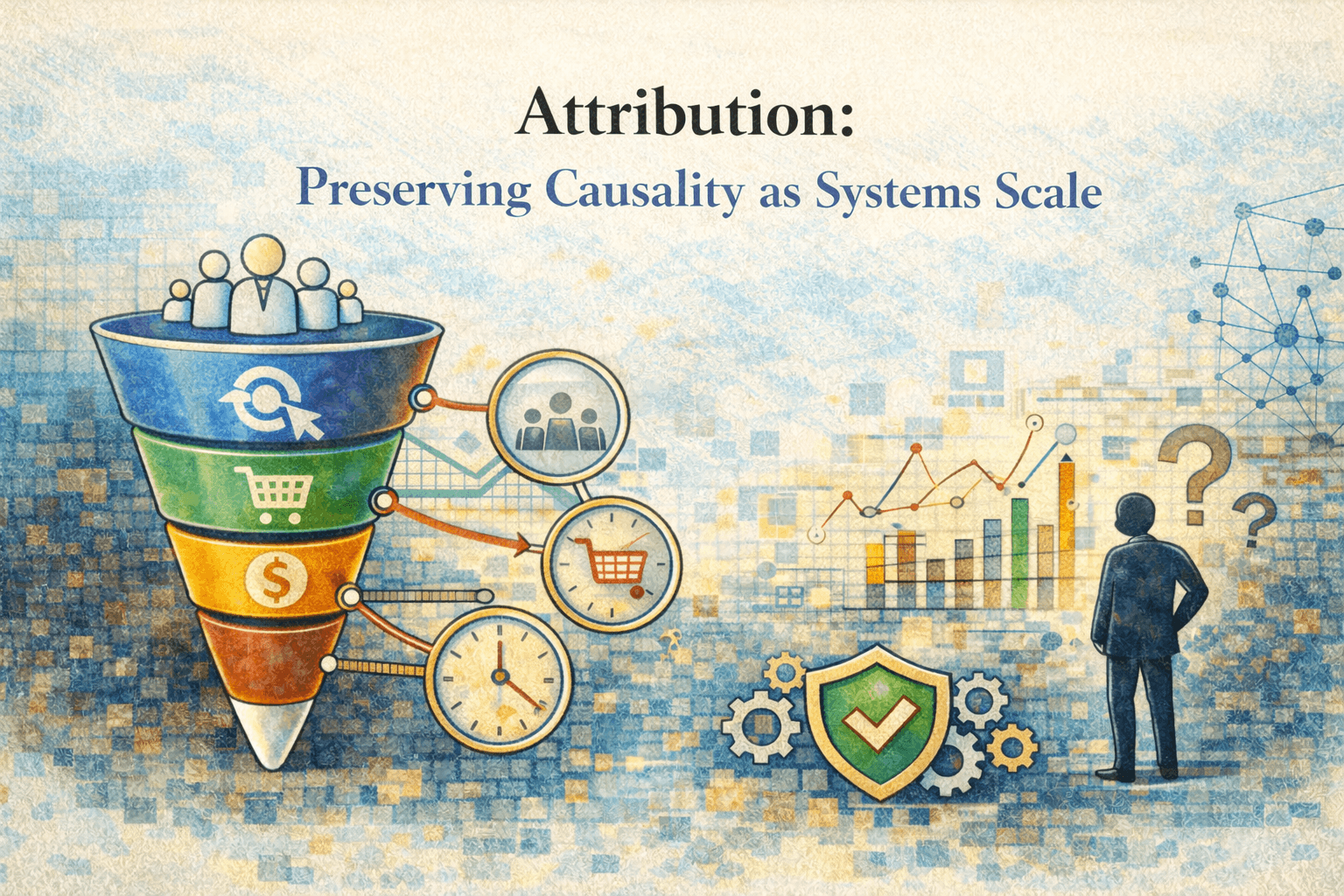
Attribution: Preserving Causality as Systems Scale

Jan 2, 2026

Most growth metrics describe outcomes after they occur. Velocity describes how a system behaves while it is operating. At Kruzeniski Digital, velocity is observed as time compression — the duration between input, feedback, and adjustment.

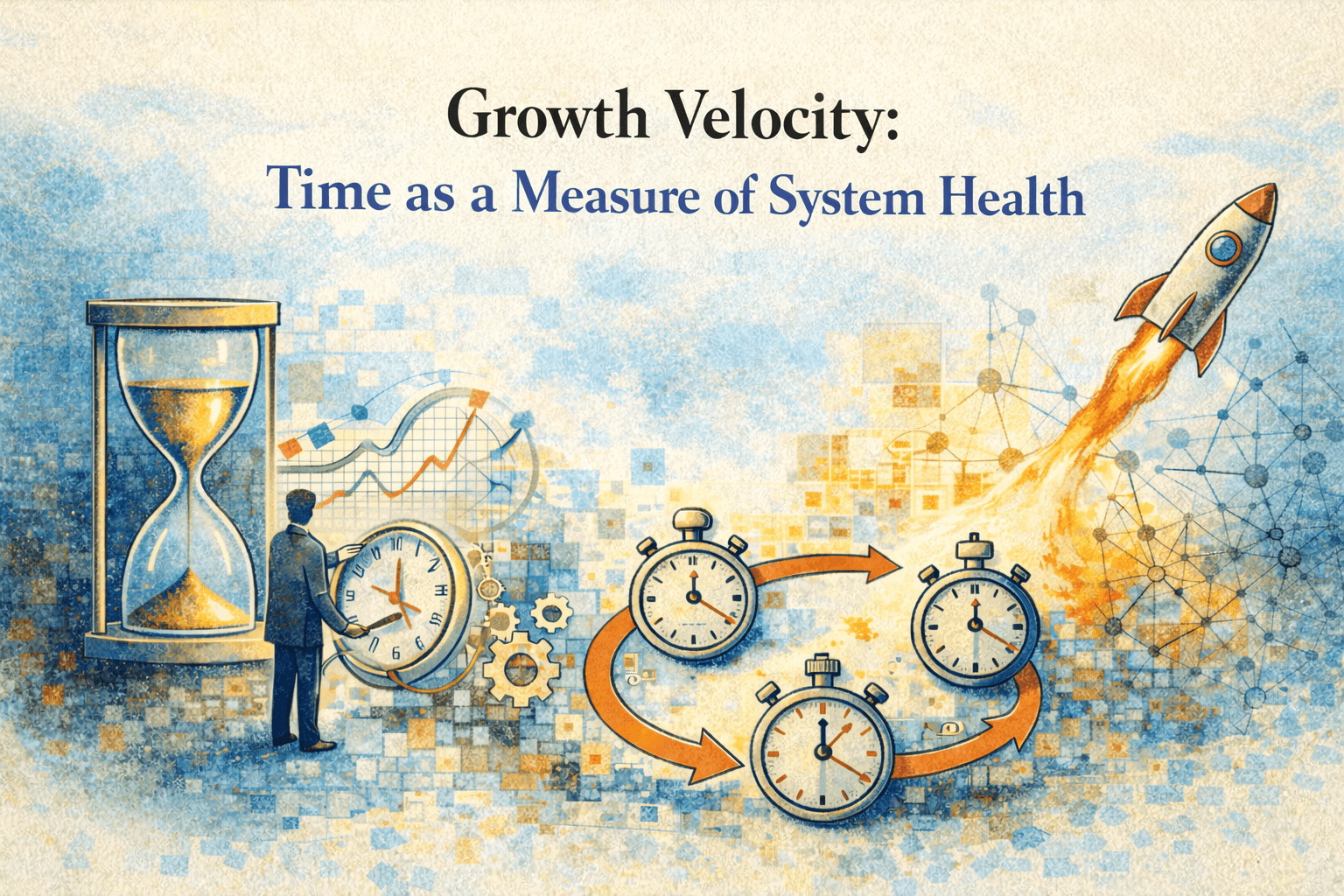
Growth Velocity: Time as a Measure of System Health

Jan 3, 2026

Most growth metrics describe outcomes after they occur. Velocity describes how a system behaves while it is operating. At Kruzeniski Digital, velocity is observed as time compression — the duration between input, feedback, and adjustment.

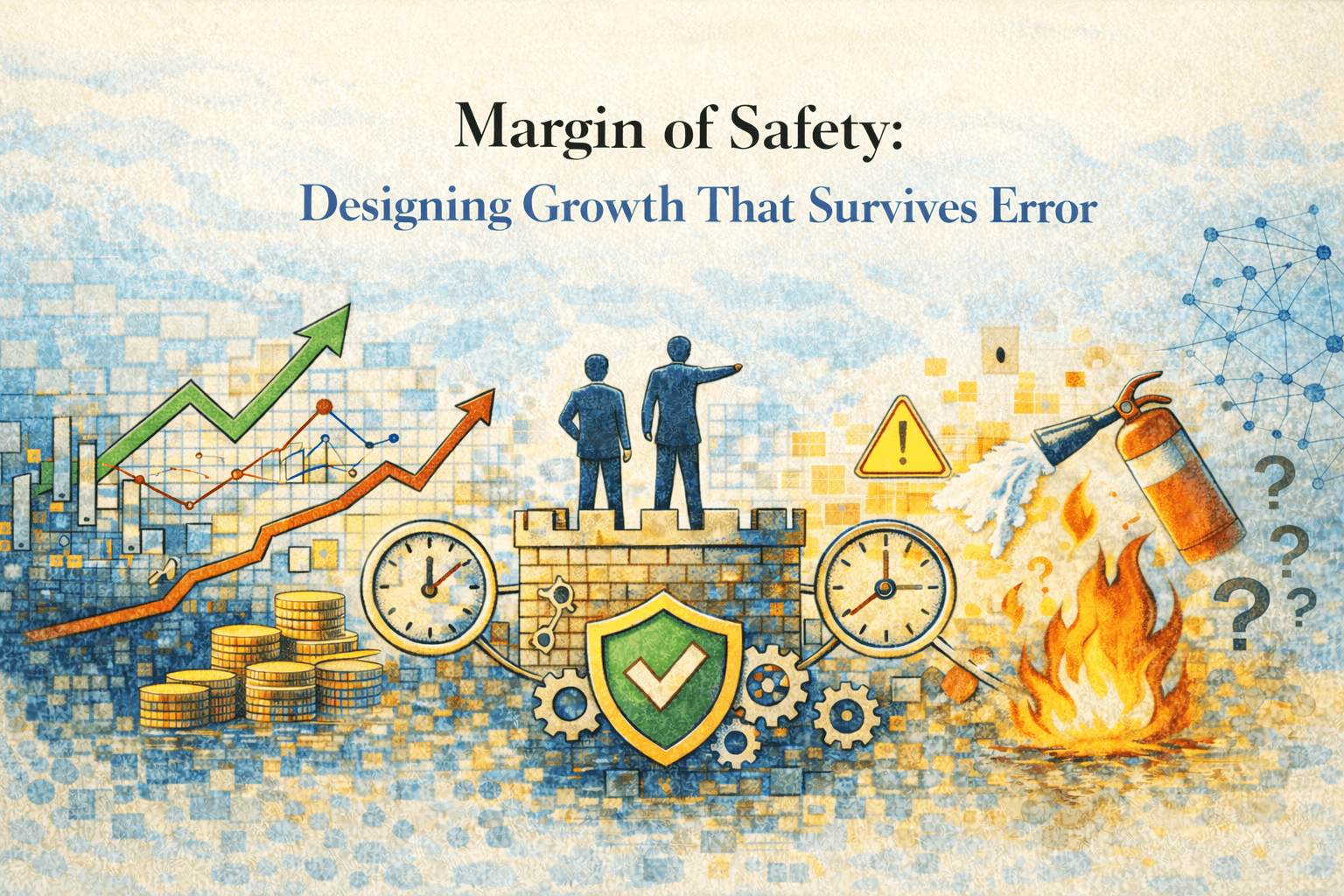
Margin of Safety: Designing Growth That Survives Error

Jan 2, 2026

In investing, margin of safety is not about prediction. It is about durability. Growth systems operate under similar conditions. Assumptions will fail. Performance will vary. Conditions will change. The relevant question is not whether a system works under ideal circumstances, but whether it continues to function when those circumstances shift.